PERSIMMON · TYPE FIRST
How to Tell If a Persimmon Is Ripe
First identify the type. Fuyu persimmons can be ready to eat while still firm and crisp. Hachiya persimmons should become fully ripe and very soft before fresh eating.先判断品种。富有柿(Fuyu)成熟后即使仍然硬脆也可以食用;蜂屋柿(Hachiya)则需要等到充分软熟、接近果冻般柔软后再直接食用。
This guide focuses on the common Japanese/Oriental persimmon types Fuyu and Hachiya. Other cultivars may behave differently. Hachiya guidance here is for fresh, untreated fruit.
QUICK CHECKS
TYPE
Fuyu or Hachiya?
SHAPE
Flat or acorn-shaped?
FEEL
Firm means different things
COLOR
Mature color helps
CHECK
Avoid real damage
VARIANT LAB · TYPE FIRST
Which persimmon do you have?
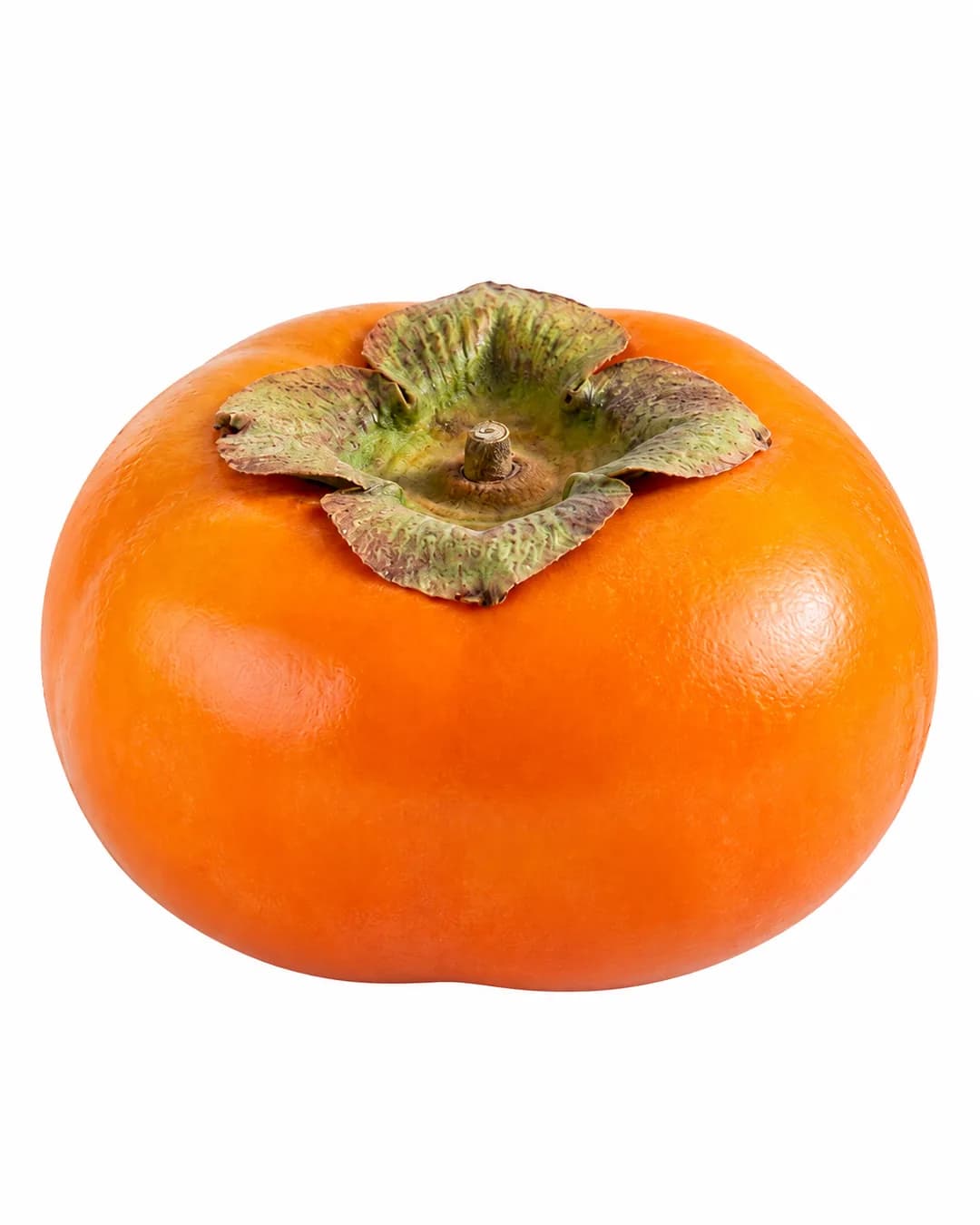
Start with the label or ask the seller. Shape helps you recognize the type; it does not replace variety confirmation.
Fuyu
NON-ASTRINGENTFIRM CAN BE RIPE.
Flat, squat, squarish-round. Mature Fuyu is commonly eaten firm and crisp.
Look for mature yellow-orange/orange color, firm or slightly softened texture, and sound skin.
Check FuyuHachiya
ASTRINGENTWAIT UNTIL VERY SOFT.
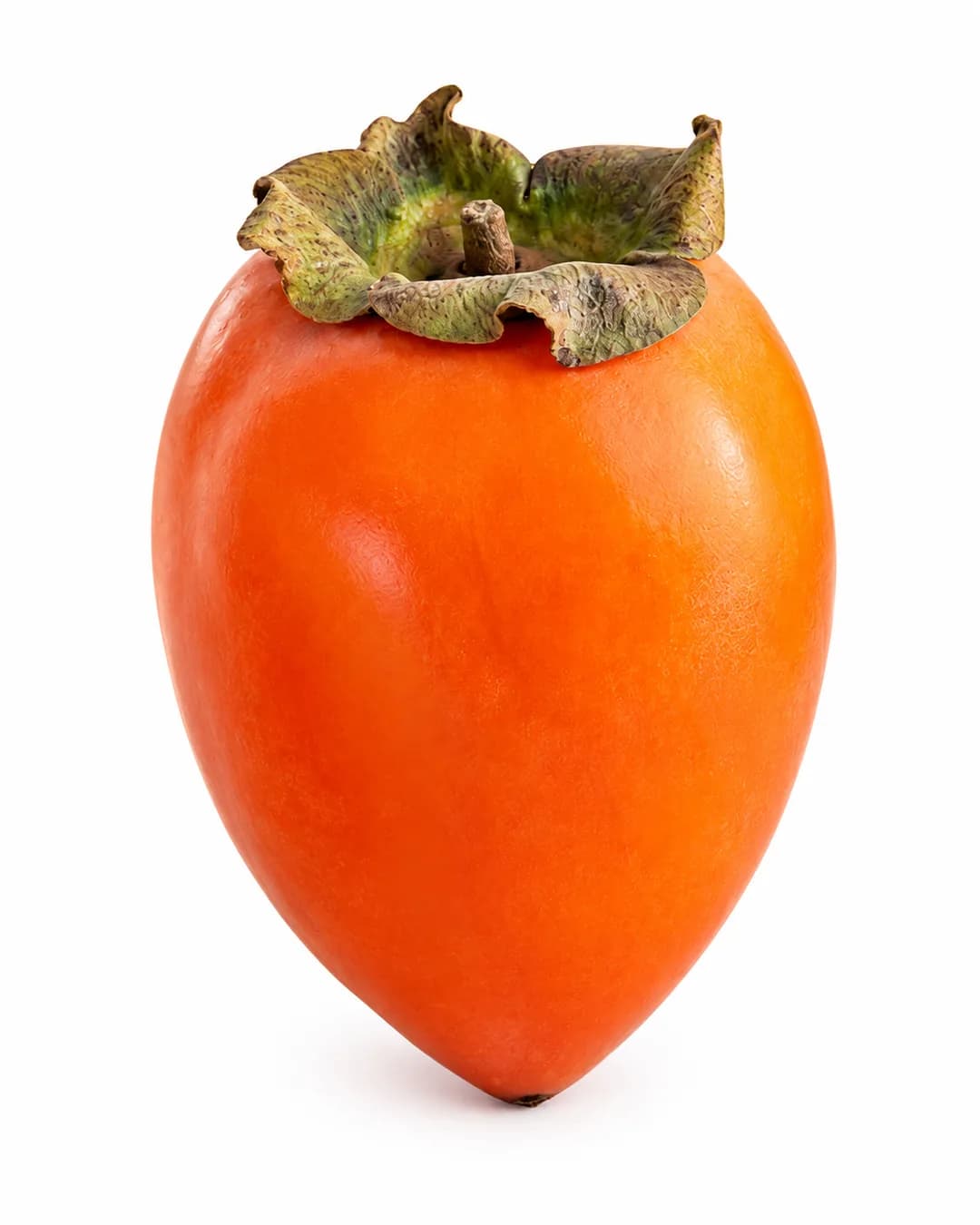
Elongated, pointed, acorn-like. Orange and firm can mean mature, but not ready for fresh eating.
Look for mature orange/reddish-orange color and very soft whole-fruit feel, without decay or localized damage.
Check HachiyaMATURE ≠ READY TO EAT
Two types. Two paths to ready.
Mature color is a milestone. The variety decides what firmness means.
Fuyu
- Green / immature
Wait for mature color appropriate to the cultivar.
WAIT - Mature color + firm / crisp
Firm can be ready. Slight softening is also possible; it is not required.
READY TO EAT
Hachiya
- Green / immature
Wait for mature color appropriate to the cultivar.
WAIT - Orange + still firm
Mature / ripening. Still astringent; not yet ready for fresh eating.
WAIT - Very soft throughout
Fully ripe, jelly-like softness can be normal. Check for sound skin and no decay.
READY TO EAT
HOW TO PICK
01
Fuyu — firm can be ready.
Firmness is not a reason to reject a mature Fuyu.
Confirm the flat, squat type with the label or seller. Look for mature yellow-orange/orange color for its cultivar. Firm, crisp fruit can be ready for fresh eating; slight softening is also possible.
- Look for
- Mature color, full healthy structure and intact skin. Firm is fine.
- Watch out for
- Significant cracks, bruises, mechanical injury or decay. Do not wait for softness as the standard rule.
02
Hachiya — wait for very soft.
Mature orange color is only one step.
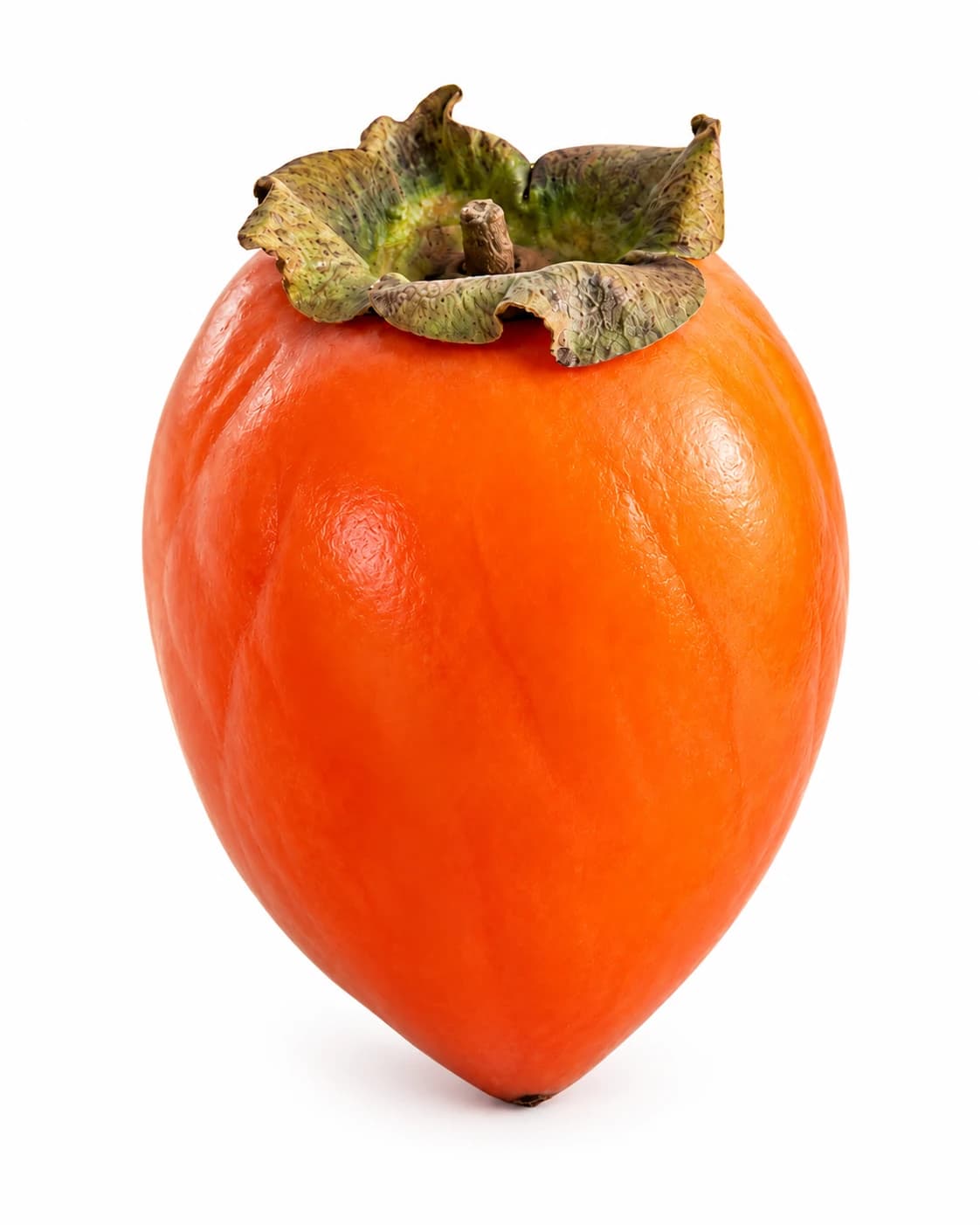
For fresh, untreated Hachiya, orange skin with a firm feel is not the normal ready-to-eat state. Support the whole fruit gently. Wait until it is very soft throughout; the ripe fruit may appear subtly translucent and feel jelly-like. Confirm by touch, not the photo alone.
03
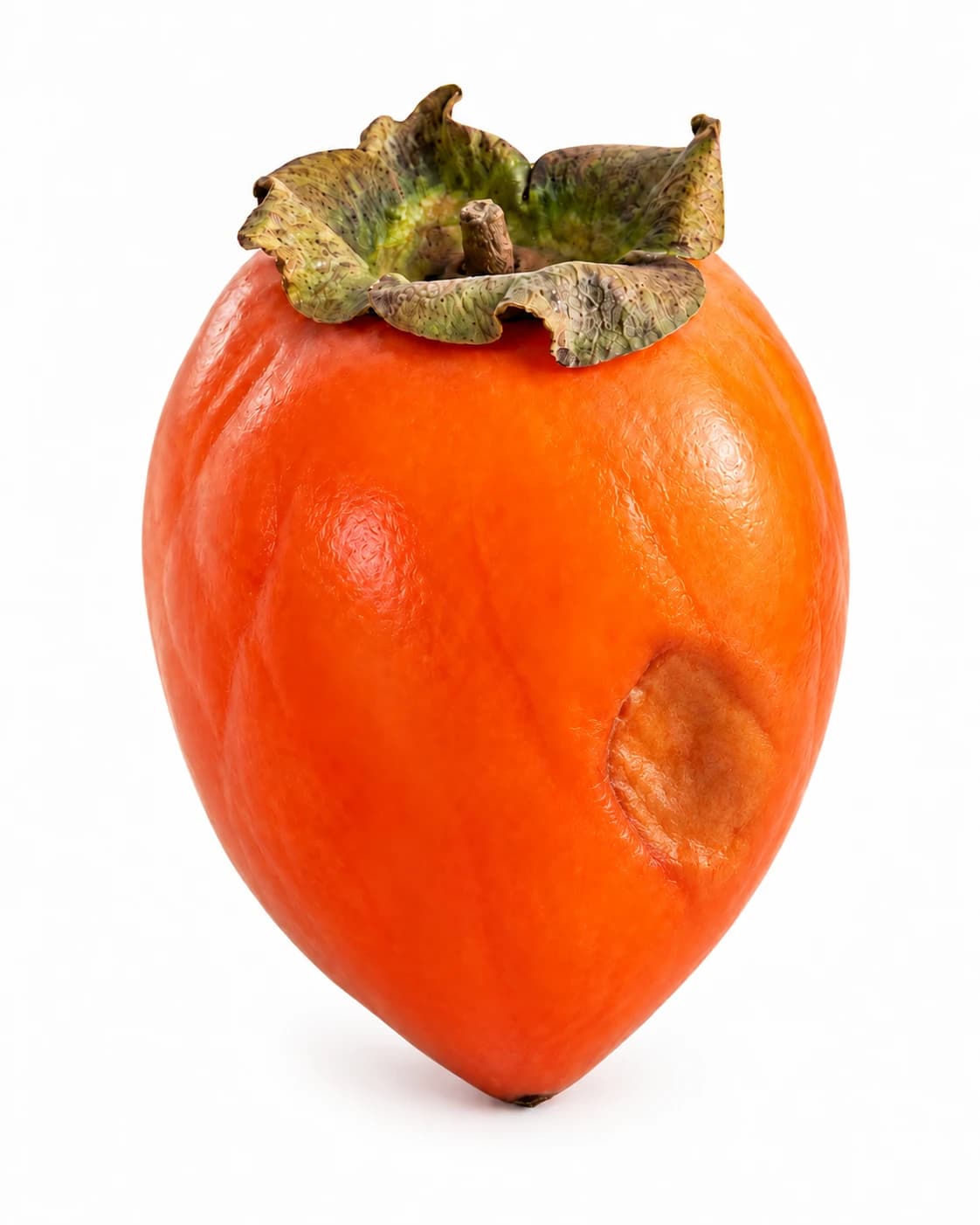
Normal softness or real damage?
Very soft does not automatically mean spoiled.
Normal Hachiya ripening softens the whole fruit evenly. A localized collapsed pocket is different. Check for significant cracks, injury, decay or abnormal leaking. The comparison keeps maturity similar and isolates one damaged area.
04
Color confirms. Type + texture decide.
Color supports maturity judgment and varies by cultivar. Fuyu develops mature yellow-orange/orange tones; Hachiya progresses toward orange/reddish-orange. These two orange fruits are both described as firm, yet their readiness differs.
DON'T OVERTHINK THESE
FIRM = UNRIPE
Not for Fuyu.
SOFT = BAD
Not for a properly ripened Hachiya.
ORANGE = READY
Not by itself.
ONE RULE FITS BOTH
Definitely not. Identify the type first.
TEST YOUR EYE
01 / 05
Which one is a Fuyu persimmon?
Look at the whole-fruit shape.
MAKE YOUR PICK
Identify the type. Compare the whole fruit and the described hand-feel.
NUTRITION SNAPSHOT
per 100g
- Calories
- 70 kcal
- Carbohydrate
- 18.6 g
- Fiber
- 3.6 g
- Sugars
- 12.5 g
- Potassium
- 161 mg
FAQ
How can you tell a Fuyu from a Hachiya persimmon?
Fuyu is generally flat and squarish-round, while Hachiya is usually oblong or conical. The important eating difference is that Fuyu can be firm, while Hachiya should be very soft.
Can you eat a Fuyu persimmon while it is firm?
Yes. Fuyu is non-astringent and is commonly enjoyed while firm.
When is a Hachiya persimmon ready to eat?
Wait until it is very soft so its astringency has faded.
Can I buy a firm Hachiya persimmon?
Yes. A sound, mature-colored Hachiya can be bought to soften at home. For fresh, untreated fruit, wait until it is very soft before eating. Firmness alone is not damage.
Should you choose a persimmon based on color alone?
No. Use mature color as a supporting clue, but identify the type and check texture and condition too.
What should you avoid when choosing persimmons?
Avoid growth cracks, major mechanical injuries, and decay.
SOURCES
PICK YOUR NEXT FRUIT